
Energy transactions involve large volumes of sensitive information. And as deals grow in size and complexity, more stakeholders become involved across regions and business functions. Deal timelines are also becoming less predictable, with around 40% of transactions closing later than originally announced.
In this environment, secure data rooms play a critical role in helping energy companies manage due diligence, control access, and communicate efficiently with investors, lenders, and partners.
This guide reviews the best data rooms for the energy industry and explains which platforms work best for different deal scenarios.
How we selected the top 5 data rooms for the energy industry
We evaluated each platform based on how well it supports real-world energy transactions, with a focus on security, performance, and usability during due diligence.
Core criteria:
- Security certifications (ISO 27001, SOC 2 Type II).
- Granular permissions, watermarking, and admin controls.
- Structured Q&A and bidder communication tools.
- Performance with large technical files (CAD, GIS, seismic).
- Data residency options, analytics, and transparent pricing.
- Support SLAs and integration capabilities.
If you would like to make a more informed choice, discover how virtual data room features and security standards help manage complex transactions safely.
A short overview of the top data rooms
| Name | Description | Best for |
|---|---|---|
| Ideals | Secure and user-friendly virtual data room with strong permission controls and reliable performance for complex deals. | Accelerated auctions and cross-border energy deals with many bidders. |
| Datasite | Enterprise-grade data room designed for large transactions, with advanced redaction, analytics, and compliance support. | Large, complex transactions with heavy compliance and lender oversight. |
| Drooms | EU-focused data room platform with strong data residency controls and automation for document organization. | Renewable and EU-centric deals with strict data residency needs. |
| ShareVault | Secure platform with policy-based rights management and deep audit trails for structured reviews. | Project finance and lender-driven diligence processes. |
| Ansarada | AI-driven data room and deal-readiness platform supporting repeatable and ongoing transactions. | Continuous deal readiness across portfolios and asset lifecycles. |
Now let’s explore each provider in detail.
1. Ideals
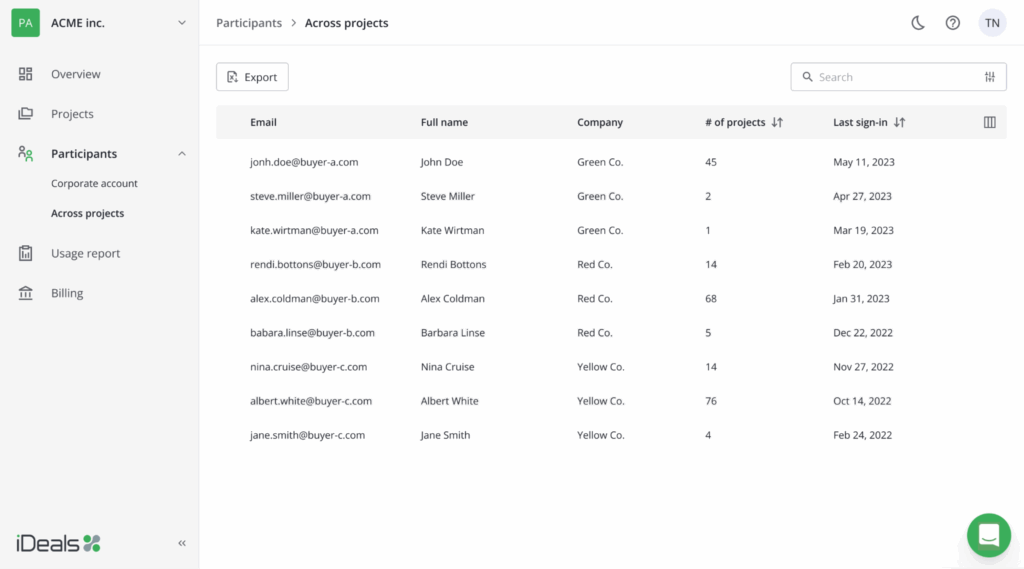
Ideals works well for accelerated auctions and cross-border energy deals with multiple bidders. It is often used when teams need to manage large volumes of technical, legal, and HSE documentation while keeping strict control over access.
Why energy teams choose it.
The platform stands out for its simple administration and fast bulk uploads, which are critical during time-sensitive business processes. Permission settings are granular enough to separate financial, technical, and safety documentation, and the built-in Q&A process supports structured communication with bidders and advisors.
Key capabilities:
- Dynamic watermarking and view-only access for sensitive files.
- Group-based permissions that match bidder and advisor structures.
- Detailed activity tracking to monitor interest and engagement.
- Bulk redaction tools for efficiently preparing large document sets.
- A clean and intuitive interface for external bidders.
Pricing.
The platform offers three pricing plans — Core, Premier, and Enterprise. They support everything from single, standard deals to large portfolios of complex transactions. Higher tiers offer more administrators, projects, storage flexibility, and service support. Pricing available on request. Free trials are also available.
Things to be aware of.
Some niche technical file types may require conversion before upload. For cross-border deals, it is also worth confirming data residency options early in the process.
2. Datasite
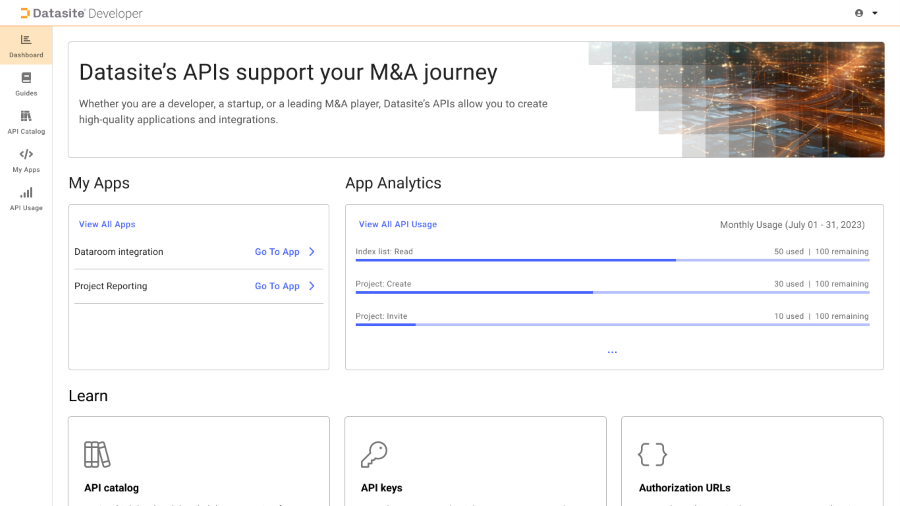
Datasite works well for large, complex energy transactions with strict compliance requirements and redaction needs. It is often used in acquisitions, joint ventures, and financing processes involving oil and gas companies, large renewable energy projects, and multiple lenders or regulators.
Why energy teams choose it.
Energy companies choose Datasite for its advanced automation and strong compliance support. AI-powered search and redaction tools help manage sensitive information efficiently, while detailed audit trails provide confidence for everyone involved in due diligence and regulatory filings.
Key capabilities:
- Intelligent redaction for personal data and trade secrets.
- AI-driven indexing.
- Engagement analytics and heatmaps to evaluate bidder interest.
- Structured Q&A workflows for controlled communication.
- Comprehensive user activity tracking.
Pricing.
Datasite does not publish pricing publicly. Costs are provided on request and depend on deal size, data volume, and required features.
Things to be aware of.
The platform’s advanced features can introduce a learning curve for deal teams. Early training and onboarding help ensure efficient use once the data room is live.
3. Drooms
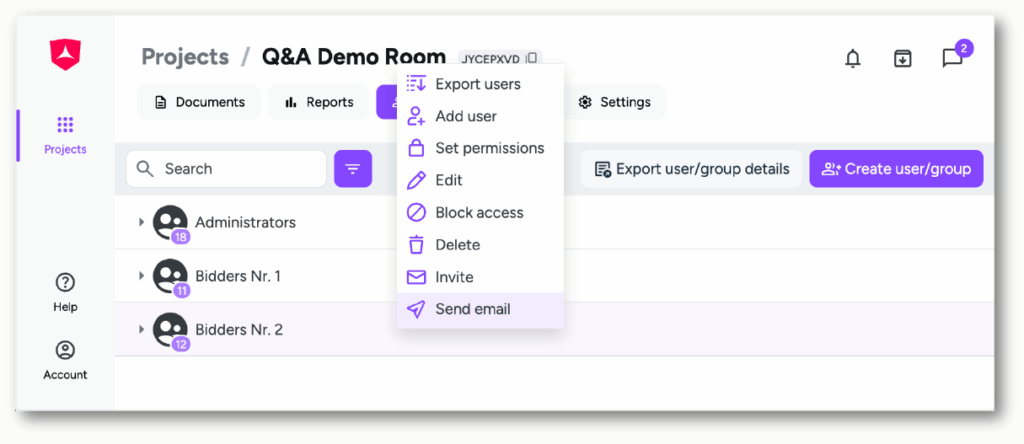
Drooms works well for renewable energy deals and EU-centric energy transactions where data residency and regulatory compliance are critical. It is often used for wind, solar, and infrastructure portfolios, as well as transactions involving European investors and partners.
Why energy teams choose it.
Energy teams value Drooms for its EU-based data centers and automation features. The platform supports structured document management and strong access controls, helping companies move away from physical data rooms while meeting regional compliance requirements.
Key capabilities:
- Smart indexing and automated folder structures.
- Automated document linking across related files.
- Granular access logs and several levels of permission control.
- Strong Q&A workflows.
- Data residency controls aligned with EU regulations.
Pricing.
Drooms offers a 30-day free trial with up to 5 users and 1 GB of storage. Its Flex plan starts at €17.90 per user/month, with 300 MB of storage included per user. For larger projects, the Enterprise option is priced on request.
Things to be aware of.
Some specialized automation features require administrator onboarding. Large GIS or CAD files should be tested early to confirm upload and access performance.
4. ShareVault
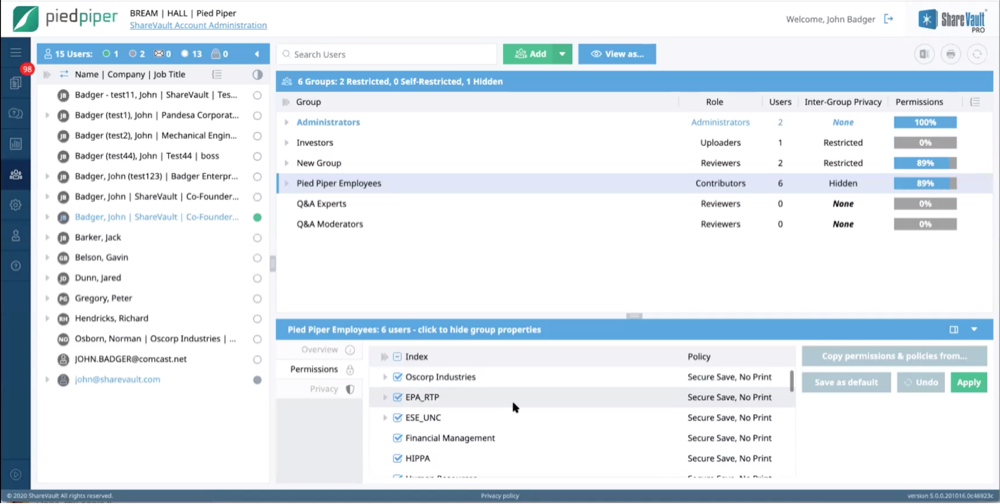
ShareVault works well for project finance and lender-driven energy transactions that require detailed tracking and strict policy controls. It is often used in oil, gas, power, and renewable energy projects where investors and lenders demand strong oversight.
Why energy teams choose it.
The platform stands out for its policy-based rights management and deep audit trails. These features help energy companies demonstrate control over sensitive information and meet regulatory compliance expectations during environmental audits and financing reviews.
Key capabilities:
- Persistent file protection to maintain control after access.
- Detailed user activity tracking and reporting.
- Structured Q&A routing for lenders and advisors.
- API options for integration with internal systems.
- Strong data encryption and access controls.
Pricing.
ShareVault offers three pricing tiers: Express, Pro, and Enterprise. Express is aimed at smaller or one-off transactions, Pro supports active M&A and fundraising workflows with added training and controls, while Enterprise is priced on request and includes full feature access, ongoing secure sharing, and dedicated project management.
Things to be aware of.
External bidders who are new to the platform may need brief guidance. A short introduction can help ensure smooth participation during due diligence.
5. Ansarada
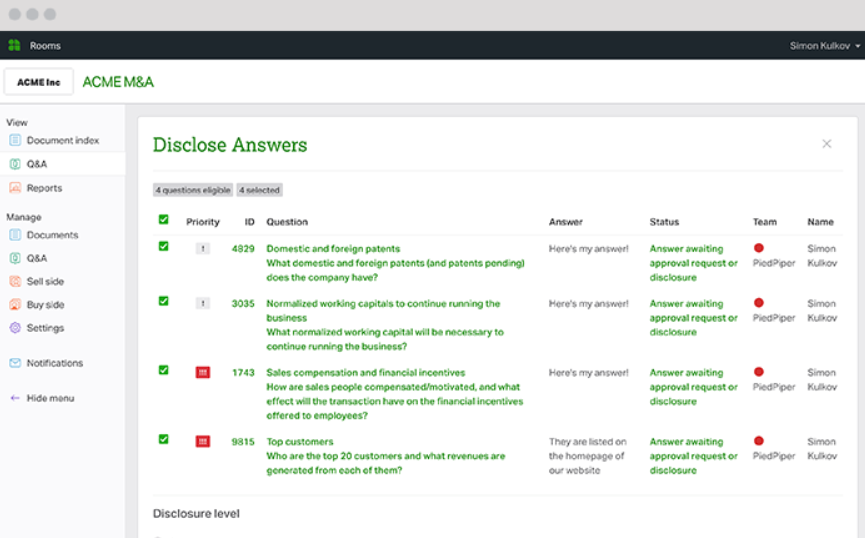
Ansarada works well for energy companies focused on continuous deal readiness rather than one-off transactions. It is often used by companies managing repeat acquisitions, joint ventures, and asset rotations across oil, gas, and renewable energy portfolios.
Why energy teams choose it.
Energy teams use Ansarada for its readiness-driven approach. Scorecards and checklists help assess HSE, ESG, and commercial preparedness, while AI-assisted Q&A improves communication with investors and partners across the asset lifecycle.
Key capabilities:
- AI-powered Q&A to support efficient due diligence.
- Readiness checklists covering environmental and commercial areas.
- Automated task management for internal teams.
- Bidder comparison insights to support evaluation.
- Secure platform with strong access controls.
Pricing.
Ansarada uses a transparent, data-based pricing model where costs depend on storage size and project duration. Pricing starts at €439 per month for 250 MB on a one-month term, with lower monthly rates available for longer commitments and higher data volumes. Larger projects can scale up to custom data ranges, with instant quotes available directly through the pricing calculator.
Things to be aware of.
For smaller or simpler deals, readiness tooling may be more than required. Tailoring modules to the deal scope helps keep workflows efficient.
Pricing models and negotiation checklist
When negotiating virtual data room pricing in the energy sector, focus on the terms that affect cost and flexibility. Key points to clarify include unlimited guest users, included storage limits, overage rates, the number of admin seats, access to advanced features, and conditions for archival exports.
Also confirm service terms such as 24/7 support availability, response times, and whether migration assistance is included.
Finally, make sure data ownership, portability, and audit log access are clearly defined to retain control after the transaction closes.
When not to use a VDR
A virtual data room is not needed at every stage of a transaction. During early internal collaboration, it is often more efficient to use internal systems until a clean and approved document set is ready.
For low-stakes vendor onboarding or basic file exchanges, secure links may be enough, as full bid management and robust security features are usually unnecessary.
A VDR becomes essential once external parties are involved and sensitive data, permits, or financial information must be shared with strict access controls and two-factor authentication.
FAQs
1. What’s the difference between a VDR and enterprise file-sharing for energy deals?
VDRs offer services tailored to due diligence, controlled access, and detailed tracking, which standard file-sharing tools do not provide.
2. How do I handle large technical files like seismic, CAD, or GIS data?
Choose a platform that supports large uploads, stable performance, and accessible viewing options. Testing file handling early helps avoid delays later.
3. Do lenders and regulators require specific certifications?
Often, yes. Many renewable energy companies and investors expect recognized security standards, especially when sensitive data is involved.
4. How long should I keep the data room open after closing?
Most teams keep it open for several months to support audits and post-close questions.
5. Can I reuse the same VDR for multiple projects or portfolios?
In many cases, yes. Subscription models are designed for reuse and support ongoing investment activity across multiple projects.